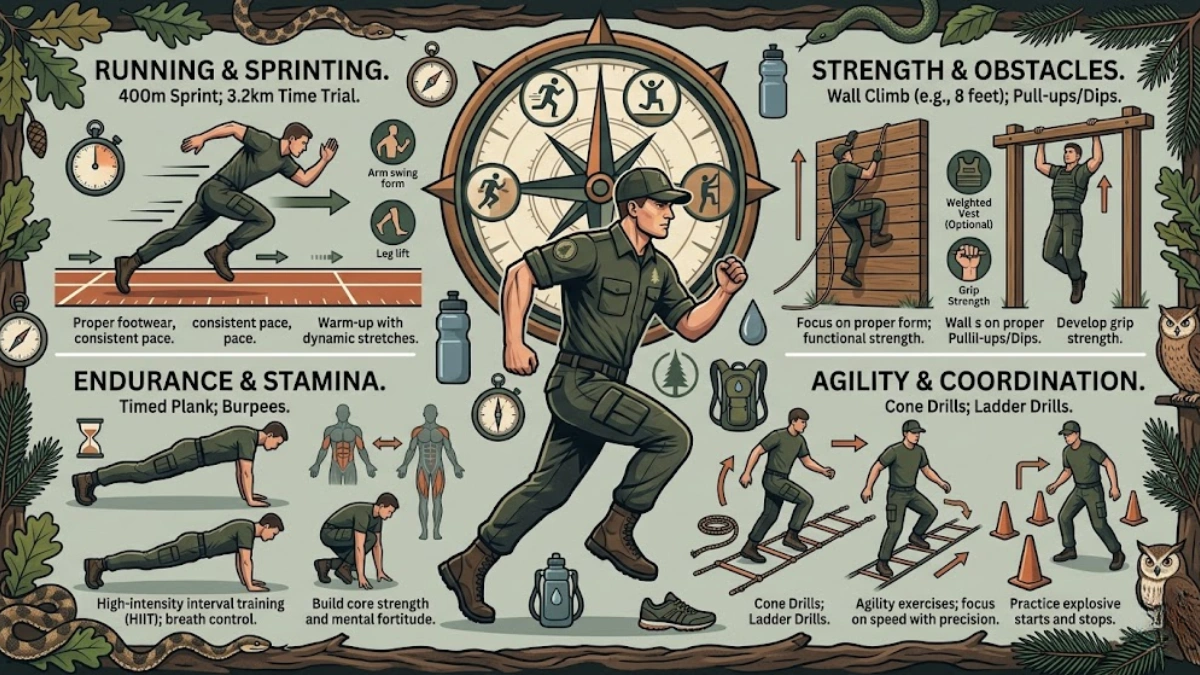
The Forest Guard Physical Test 2026 is one of the most crucial stages in the forest department recruitment process. After clearing the written examination, candidates must qualify the Physical Efficiency Test (PET) and Physical Standard Test (PST) to move ahead in the selection process.
This stage is extremely important because most candidates are shortlisted or rejected based on their physical performance. Even if a candidate scores high in the written exam, failure in the physical test leads to disqualification.
In 2026, various state forest departments are expected to conduct large-scale physical tests for Forest Guard, Wildlife Guard, and Forester posts across India.
Overview of Forest Guard Physical Test 2026
The physical test is designed to evaluate a candidate’s strength, stamina, endurance, and overall fitness level. Since Forest Guards work in forests, hills, and wildlife areas, physical fitness is a mandatory requirement.
Key Highlights:
- Stage: After Written Examination
- Components: PET (Physical Efficiency Test) + PST (Physical Standard Test)
- Nature: Qualifying (must pass)
- Applicable Posts: Forest Guard, Wildlife Guard, Forester
- Selection Importance: Mandatory for final merit list
Forest Guard Physical Test Structure (PET & PST)
| Test Type | Purpose | What is Checked |
|---|---|---|
| PST (Physical Standard Test) | Body measurement eligibility | Height, chest, weight |
| PET (Physical Efficiency Test) | Fitness & stamina | Running, walking, endurance |
| Medical Test | Health fitness | Physical and medical condition |
Physical Standards (PST) Requirements
Physical standards differ slightly from state to state, but general requirements remain similar.
Male Candidates:
- Height: Approx. 165–168 cm (varies by state)
- Chest: 79–84 cm with expansion requirement
Female Candidates:
- Height: Approx. 150–155 cm
- Weight: Minimum fitness requirement in some states
Only candidates meeting PST standards are allowed to participate in PET.
Physical Efficiency Test (PET) Details
PET is the most challenging stage and tests a candidate’s endurance and physical strength.
Common PET Events:
1. Running Test
- Male candidates: 1.6 km to long-distance runs (state-wise variation)
- Female candidates: Shorter distance running or timed runs
2. Walking Test (Endurance Test)
- Distance may range from 8 km to 25 km
- Must be completed within a specific time limit
3. Additional Physical Activities (in some states)
- Long jump
- High jump
- Rope climbing (rare cases)
Selection Process After Physical Test
The complete selection process includes:
- Written Examination
- Physical Standard Test (PST)
- Physical Efficiency Test (PET)
- Medical Examination
- Document Verification
- Final Merit List
PET/PST is a qualifying stage and very important for final selection.
Common Reasons for Failure in Physical Test
Many candidates fail due to avoidable mistakes such as:
- Lack of regular running practice
- Poor stamina and endurance
- Ignoring walking test preparation
- Not meeting height/chest requirements
- Last-minute preparation
- Medical fitness issues
Preparation Tips for Forest Guard Physical Test 2026
1. Start Running Practice Early
- Begin with 1–2 km daily
- Slowly increase distance every week
- Focus on speed and endurance
2. Build Stamina Gradually
- Jogging for 20–30 minutes daily
- Cycling or skipping rope
- Consistency is more important than intensity
3. Practice Long Walking
- Walk 8–15 km regularly
- Maintain steady pace
- Use comfortable sports shoes
4. Basic Strength Training
- Push-ups
- Squats
- Stretching exercises
- Core strengthening
5. Maintain Proper Diet
- High protein food (milk, eggs, pulses)
- Stay hydrated
- Avoid junk and oily food
6. Mock Physical Practice
- Simulate PET conditions
- Time your performance
- Improve weak areas
Tips for Female Candidates
- Focus on stamina rather than speed
- Start with light jogging and walking
- Gradually increase exercise intensity
- Maintain consistency in training
Importance of Physical Test in Forest Jobs
The Forest Guard job involves:
- Patrolling forest areas
- Wildlife protection duties
- Long field work in difficult terrain
- Emergency response activities
That is why physical fitness is a key selection factor.
FAQs – Forest Guard Physical Test 2026
Q1. What is the Forest Guard Physical Test?
It is a fitness test including running, walking, and body measurements (PST + PET).
Q2. Is physical test compulsory for forest jobs?
Yes, it is mandatory for all candidates.
Q3. What happens if I fail PET or PST?
You will be disqualified from the recruitment process.
Q4. What is the running distance in Forest Guard physical test?
It varies by state, generally between 1.6 km to long-distance endurance tests.
Q5. Can female candidates pass the physical test easily?
Yes, with regular practice and training, female candidates can easily clear PET.
Conclusion
The Upcoming Forest Guard Physical Test 2026 is a deciding stage in forest department recruitment. It evaluates whether candidates are physically capable of handling real forest duties. Proper preparation, consistent practice, and good stamina training can help candidates easily clear PET and PST stages.
Success in forest recruitment depends on both written knowledge and physical fitness, so candidates should prepare for both simultaneously.